
Embedded Finance and Flexible Payment Models: Industry Trends and Outlook
Embedded finance and flexible payment models are reshaping the financial services ecosystem. Payments, lending, and banking are increasingly invisible to users, embedded directly within digital experiences. Driven by younger consumer preferences, platform monetization strategies, and advances in payment infrastructure, embedded finance is becoming the dominant delivery model for financial services. While regulatory and risk challenges remain, industry momentum suggests embedded finance will define the future of payments globally.
No hidden fees. Ever.
Real-time accounting
SOC 1 & SOC 2 compliance
Expert human support

Table of Contents
Introduction
Embedded finance refers to the integration of financial services directly into non financial platforms. Rather than forcing users to leave an application to complete a transaction, payments, lending, insurance, and banking services are delivered natively within the product experience. One of the most influential developments within embedded finance is the rise of embedded payments and flexible payment models such as Buy Now, Pay Later. The embedded payments market alone is projected to exceed $360 billion in annual revenue by 2027 [1]. Growth is being driven primarily by changing consumer expectations, with more than 80 percent of Gen Z and millennial consumers historically adopting BNPL options [2]. This report examines embedded finance and flexible payment models from a global and U.S. perspective, with a focus on market growth, BNPL adoption, enabling technology, competitive dynamics, regulatory considerations, and emerging use cases. The purpose of this report is to serve as a referenceable industry resource rather than a promotional asset.
Key Market Statistics and Trends
Market Growth Overview
The global embedded finance market is experiencing sustained high growth. Embedded finance revenues are projected to grow from approximately $65 billion in 2022 to over $183 billion by 2027 [10]. Embedded payments alone are expected to exceed $360 billion by 2027 [1]. In terms of transaction volume, embedded finance is forecast to process more than $7 trillion annually by 2030 on a global basis [5]. In the United States, embedded finance transaction volume is expected to reach approximately $7 trillion by 2026 [6].

BNPL Market Expansion
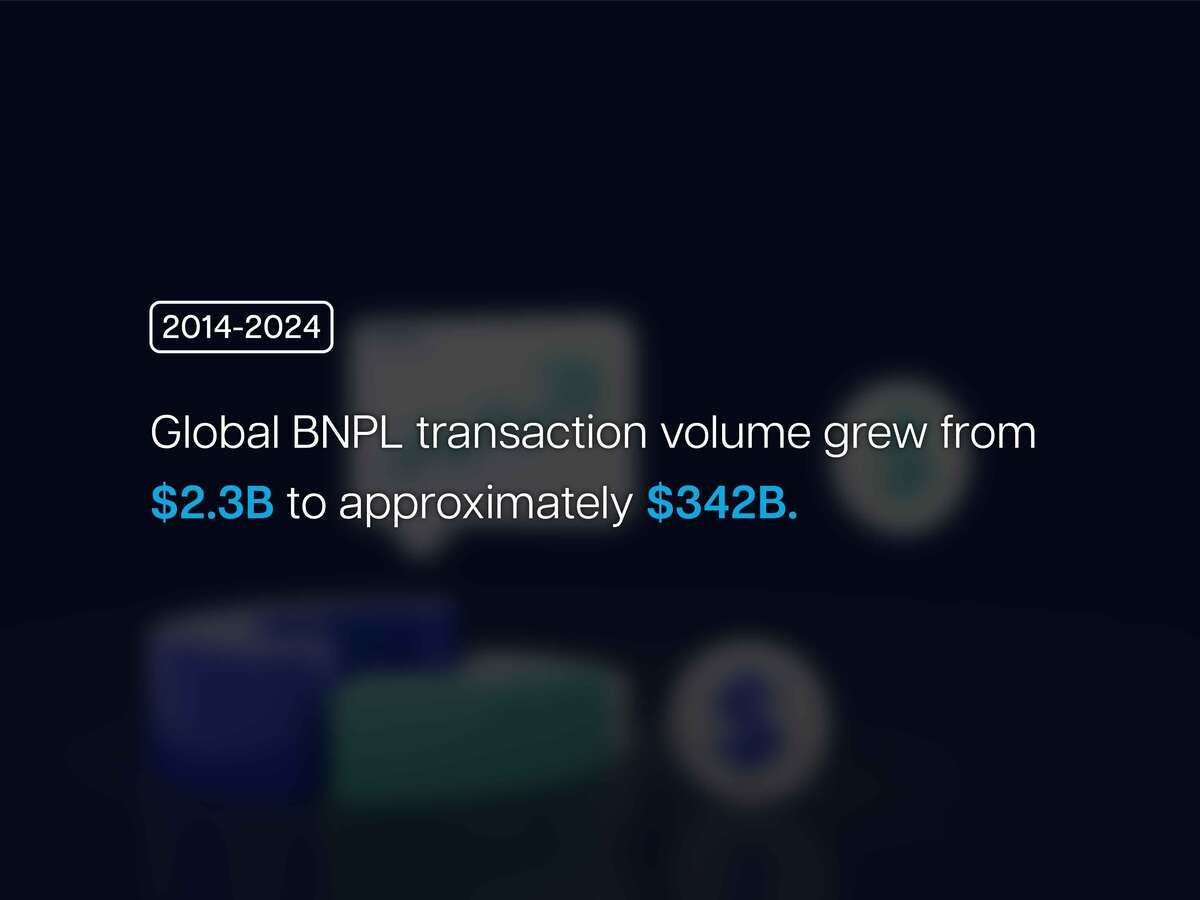
Global BNPL transaction volume grew from $2.3 billion in 2014 to approximately $342 billion in 2024 and is expected to exceed $580 billion by 2030 [5]. BNPL now accounts for roughly 5 percent of global e commerce spend, with projections reaching 7 percent by 2026 [11].
Demographic Adoption
BNPL adoption is highest among younger consumers. In the United States, 59 percent of Gen Z and 58 percent of millennials report using BNPL services, compared to 37 percent of Gen X and under 20 percent of Baby Boomers [3].

Merchant Impact
Merchants offering BNPL experience conversion rate increases of 20 to 30 percent and average order value increases of 30 to 50 percent [4]. Embedded payments also improve checkout speed and reduce friction, contributing to higher customer retention [6].

Understanding Embedded Finance
Definition and Core Components
Embedded finance is the integration of financial services such as payments, lending, banking, and insurance directly into non financial software platforms [7]. These services are typically enabled through APIs provided by banks, fintechs, or payment processors. Embedded payments represent the most common entry point. Examples include in app checkout, stored credentials, wallet based payments, and platform managed invoicing.
Everyday Examples
Common examples include ride sharing platforms processing payments automatically at the end of a trip, e commerce platforms offering one click checkout, and marketplaces handling seller payouts internally. In each case, the user does not interact directly with a bank during the transaction [8].
Business Value
Embedded finance allows platforms to monetize financial flows, increase customer lifetime value, and control the user experience end to end. Platforms offering embedded payments and financial services typically see improved retention and increased revenue per user [6].
Embedded Finance Market Growth Drivers
Digital Commerce Expansion
The continued shift toward digital commerce is a major growth driver. Online marketplaces, SaaS platforms, and mobile applications increasingly require integrated payment and financing options to remain competitive [10].
Platform Monetization Strategies
Non financial platforms are embedding payments, lending, and insurance to create new revenue streams. These services generate fees, interest income, and interchange revenue while strengthening platform lock in [6].
Global Adoption Trends
North America currently leads in embedded finance market value, followed closely by Europe. Asia Pacific is the fastest growing region due to widespread mobile wallet adoption and super app ecosystems [4].
The Rise of Buy Now Pay Later and Flexible Payment Models
BNPL Model Overview
BNPL allows consumers to split purchases into fixed installment payments, often without interest when paid on time. The merchant pays a fee to the BNPL provider in exchange for higher conversion rates and order values [4].
Expansion Beyond Retail
BNPL has expanded beyond discretionary retail purchases into groceries, food delivery, healthcare services, travel, and education. Surveys show that 31 percent of BNPL users have used it for groceries and 29 percent for food delivery [3].
B2B BNPL Adoption
BNPL models are increasingly being applied to B2B transactions. Businesses use installment based purchasing to manage cash flow and preserve working capital when buying inventory, equipment, or services [4].
Generational Shifts in Payment Preferences
Gen Z and Millennial Behavior
Younger consumers prefer transparent, fixed payment structures over revolving credit. Over 80 percent of early BNPL adoption came from Gen Z and millennials [2]. A 2024 survey showed that during the holiday season, more Gen Z consumers used BNPL than credit cards, marking a generational shift in preferred payment methods [9].
Broadening Adoption
While younger consumers lead adoption, usage among Gen X and Baby Boomers continues to rise as BNPL becomes more widely available through banks and major payment platforms [2].
Benefits for Businesses and Platforms
Revenue and Conversion Improvements
Embedded payments and BNPL options significantly improve checkout performance. Merchants experience higher completion rates, larger transactions, and reduced cart abandonment [4].
Customer Experience and Retention
Integrated payments reduce friction and keep users within a single platform. This convenience increases satisfaction and repeat usage [6].
Operational Efficiency
Embedded payments streamline reconciliation, invoicing, and payout workflows. Businesses reduce manual processes and administrative overhead [6].
Data Driven Financial Services
Platforms leverage customer data to underwrite risk, extend financing, and personalize financial offers. This enables broader access to financial services while maintaining risk controls [6].
Competitive Landscape
Key BNPL Providers
Major BNPL providers include Affirm, Klarna, Afterpay, Zip, and PayPal. These firms partner with retailers, platforms, and payment processors to embed financing at checkout.
Entry of Large Technology Firms
Large technology and financial companies have entered the BNPL space through product launches, acquisitions, and partnerships. This has increased competition and accelerated consolidation [8].
Platform and Bank Partnerships
Banks increasingly partner with fintech providers to deliver embedded services while maintaining regulatory compliance. This partnership driven model is expected to dominate long term [7].
Regulatory and Risk Considerations
Regulatory Developments
Regulators in the U.S., UK, and EU are increasing oversight of BNPL providers. Focus areas include disclosure requirements, affordability checks, and consumer protection [9].
Consumer Risk and Debt Exposure
BNPL can encourage overspending. Approximately 18 percent of U.S. BNPL users report missing at least one payment, prompting providers to improve credit reporting and limits [11].
Fraud and Security
Fraud targeting BNPL platforms has increased significantly, with reported cases rising by approximately 60 percent since 2021. Providers are investing heavily in identity verification and fraud detection systems [5].
Future Outlook and Emerging Trends
Expansion Into New Use Cases
Future growth areas include healthcare financing, insurance payments, education, subscriptions, and longer term installment products [9].
Technology Innovation
AI driven underwriting, real time risk assessment, and API standardization will continue to reduce friction and expand eligibility for flexible payments [10].
Embedded Finance as the Default Model
By 2030, approximately 74 percent of digital platforms are expected to offer embedded financial services. Embedded finance is transitioning from a differentiator to a baseline expectation [4].

Conclusion
Embedded finance and flexible payment models are reshaping the financial services ecosystem. Payments, lending, and banking are increasingly invisible to users, embedded directly within digital experiences. Driven by younger consumer preferences, platform monetization strategies, and advances in payment infrastructure, embedded finance is becoming the dominant delivery model for financial services. While regulatory and risk challenges remain, industry momentum suggests embedded finance will define the future of payments globally.
References
- Accenture, Embedded Payments Market Forecast
- Insider Intelligence, BNPL Adoption by Generation
- PartnerCentric, 2025 BNPL Consumer Trends Report
- Open Ledger, Embedded Finance Trends 2025
- World Economic Forum, Embedded Finance Market Outlook
- Bain & Company, Embedded Finance Strategy Report
- RevitPay Knowledge Base, Embedded Payments Overview
- Reuters, BNPL Market and Platform Expansion Analysis
- PayPal Business Resource Center, Flexible Payments Research
- Juniper Research, Embedded Finance Revenue Forecast
- Worldpay, Global Payments Report
Supercharge your Payments
RevitPay is here to help you scale smarter — from your 1st transaction to your 100,000th.
Previous
Next
Frequently Asked Questions
Recent Articles




A Seamless Start to Smarter Payment Processing
Request an Application
Submit for Approval
Start Processing
Explore More Online Payment Solutions
Everything you need to process payments wherever, whenever.
Seamless & Secure Payment Processing
Payment Methods That Power High Risk Businesses
We offer a wide range of secure, flexible payment methods tailored to the needs of high risk merchants. From credit card processing and mobile payments to ACH, eCheck, and more, our solutions are built to help your business accept payments confidently.
Credit Cards
Fast, familiar, and essential.
Give your customers the convenience of paying by credit card while maintaining the fraud protection and flexibility high risk merchants need.
Mobile Payments
Payments on the go.
Whether in-store or remote, accept transactions via smartphones and tablets, keeping your business agile and responsive.
Bitcoin & Crypto Payments
Stay ahead of the curve.
Expand your payment options to bypass traditional banking barriers and get paid faster—with global reach and fewer limitations.
MOTO Payments
Mail and telephone orders made easy.
Process card-not-present transactions securely with MOTO functionality, ideal for businesses that take payments by phone or through manual orders.
ACH Payments
Lower fees, higher reliability.
Automated Clearing House (ACH) payments are perfect for recurring billing or high-ticket items, offering a secure, bank-to-bank alternative to cards.
eCheck Payments
Modernize check payments.
Accept digital checks with ease, streamlining your processing while reducing risk and delays often associated with traditional paper checks.
Seamless Continuity Billing for Subscription-Based Businesses
Looking to support subscription models? Our Continuity Subscriptions solution offers automated recurring billing, built-in autobill features, and reduced payment churn—perfect for businesses that rely on predictable revenue.

Find the Right Way to Get Paid
Whether you’re running an online store, accepting payments remotely, or operating in a high risk space, RevitPay gives you the tools to process transactions with confidence and ease.
A Seamless Start to Smarter Payment Processing
Request an Application
Submit for Approval
Start Processing
Ready to get started?
Join businesses who are saving thousands each year with RevitPay.